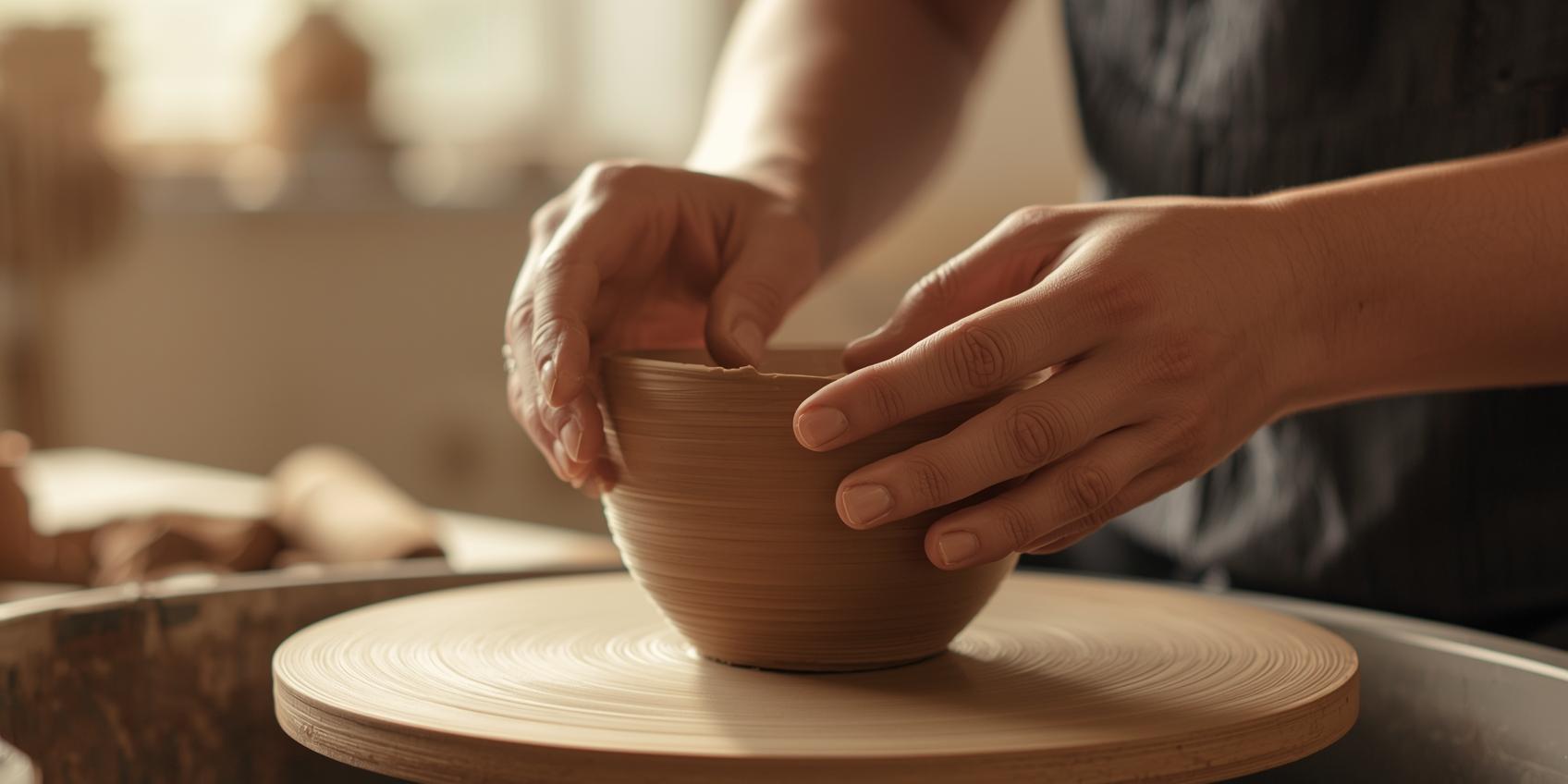
What we own can either disconnect us from the world or connect us to it. Handmade, when chosen with intention, does the latter.
Why handmade matters
Handmade objects carry the imprint of the maker. A terracotta bead is not identical to the next; a dokra ring bears the trace of wax and fire; a madurkathi mat holds the rhythm of the weaver's hands. That imperfection is not a flaw — it is the mark of a human being. When we choose handmade, we are choosing to value time, skill, and story over speed and uniformity. We are also choosing to support the people behind the product. In a world of anonymous supply chains, that choice is radical.
Fewer, better things
Thoughtful living is not about buying more. It is about buying less and caring more. A single piece of jewellery that you know was made by an artisan in Eastern India, that you can trace and treasure, often outlasts a drawer full of fast fashion. A madurkathi mat that you use for years becomes part of your daily ritual — and your purchase has already supported a weaver's family for a season. The goal is not accumulation but connection: to the object, to the maker, and to the tradition behind it.
Terracotta jewellery and sustainable fashion
Fashion is one of the most polluting and exploitative industries on earth. But fashion can also be a force for good when we shift what we value. Terracotta jewellery from Eastern India is naturally sustainable: it uses local clay, traditional kilns, and no synthetic chemicals. It is also part of a cultural continuum. When you wear it, you are not just accessorising — you are carrying a piece of that continuum. The same is true for dokra and madurkathi. Sustainable fashion, in this sense, is not a trend; it is a practice of alignment between what we wear and what we believe.
The ripple effect
Every time you choose a piece from House of Dhrti, you are sending a signal. You are saying that you care about who made it, how it was made, and whether the maker was paid fairly. That signal reaches our artisan partners. It tells them that their skill is seen and valued. It helps them plan, invest, and pass their craft to the next generation. You are not just a customer — you are part of a chain of respect that runs from your home to a village in Eastern India. That is the ripple effect of thoughtful living.
Where to start
You don't have to overhaul your life. Start with one piece. One mat. One conversation. Explore our collections, read our artisans' stories, and when you're ready, choose something that speaks to you. Wear it, use it, and when someone asks where it's from, tell them. That is how thoughtful living spreads — one story at a time.