Behind every piece lies a human story.
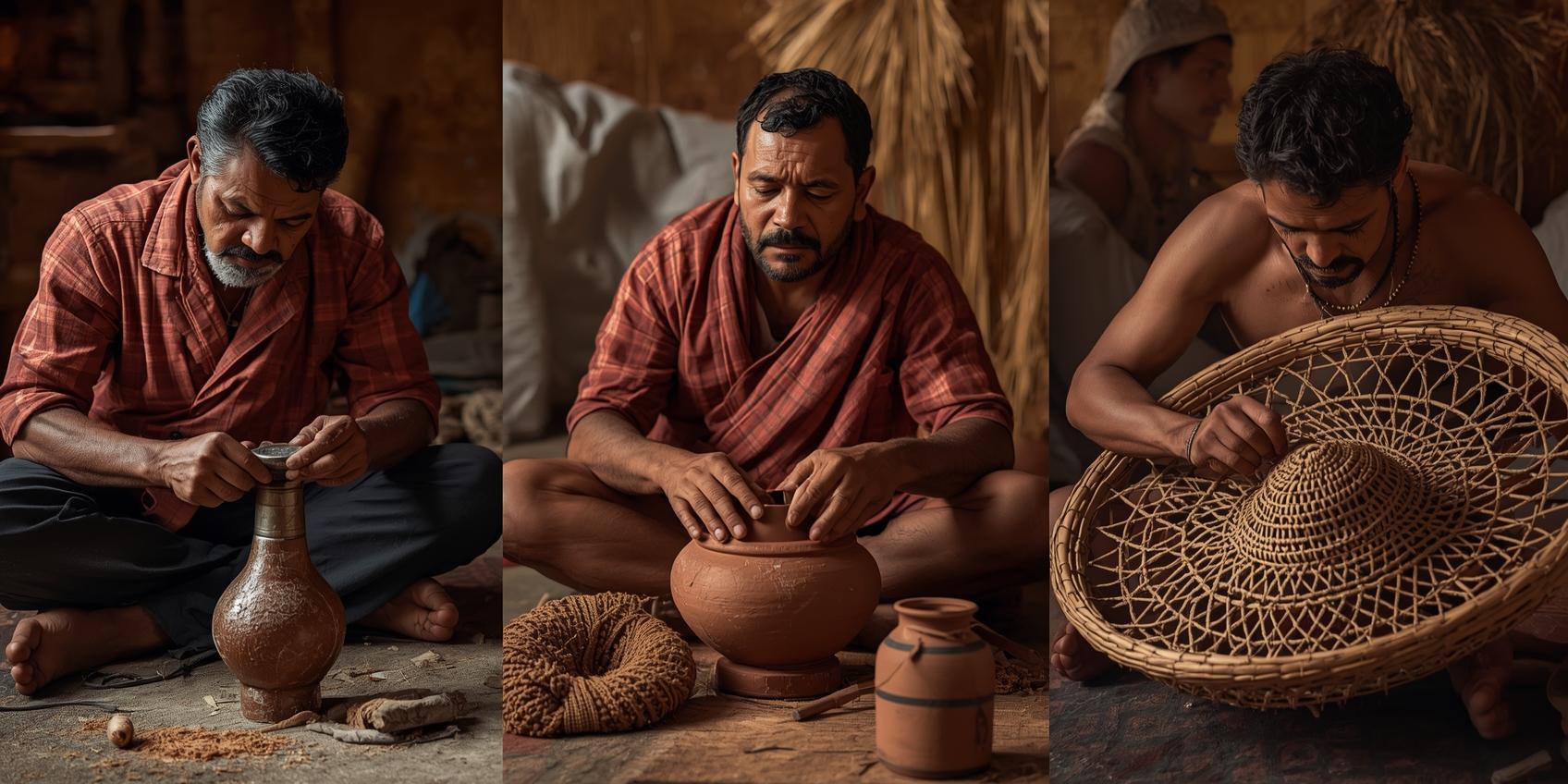
The hands that shape our collections are not anonymous. They belong to men and women in villages across Eastern India who have kept ancient craft alive through generations — and who deserve to be seen, valued, and sustained.
Artisans of Eastern India — Terracotta & Madurkathi
In the villages of Eastern India, terracotta jewellery is more than ornament; it is identity. Artisans hand-shape and fire clay into beads and pendants using techniques passed down through families. In the same region, madurkathi weavers work with natural reeds from the wetlands, creating mats and home crafts that breathe with the land. Life here is tied to the monsoon, to the soil, and to the rhythm of handwork. Challenges are real: limited access to markets, pressure to migrate for wage labour, and the slow erosion of traditional knowledge. When we partner with these communities, we commit to fair pay, patient timelines, and long-term relationships. The result is not just beautiful objects but real income uplift and the chance for the next generation to choose craft.
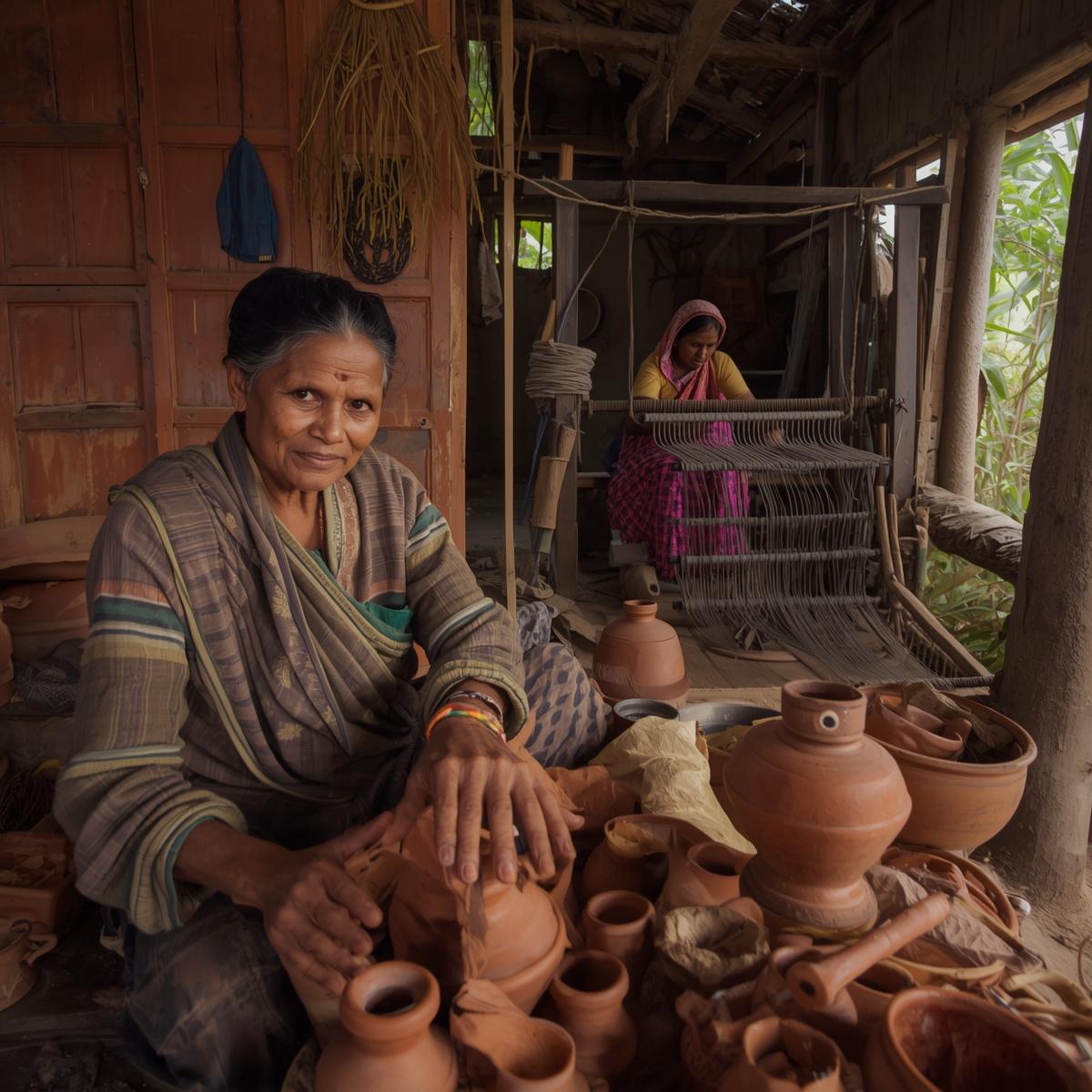
Village life & process — Our terracotta partners work in family units: preparing clay, moulding, drying, and firing in traditional kilns. Madurkathi weavers source reeds from local marshes and weave on handlooms at home. Every piece reflects the maker's hand and the rhythm of the seasons.
Income & dignity — Fair and consistent orders mean families can plan, invest in tools, and keep children in school. We don't treat artisans as suppliers; we treat them as custodians of heritage.
Artisans of Eastern India — Dokra
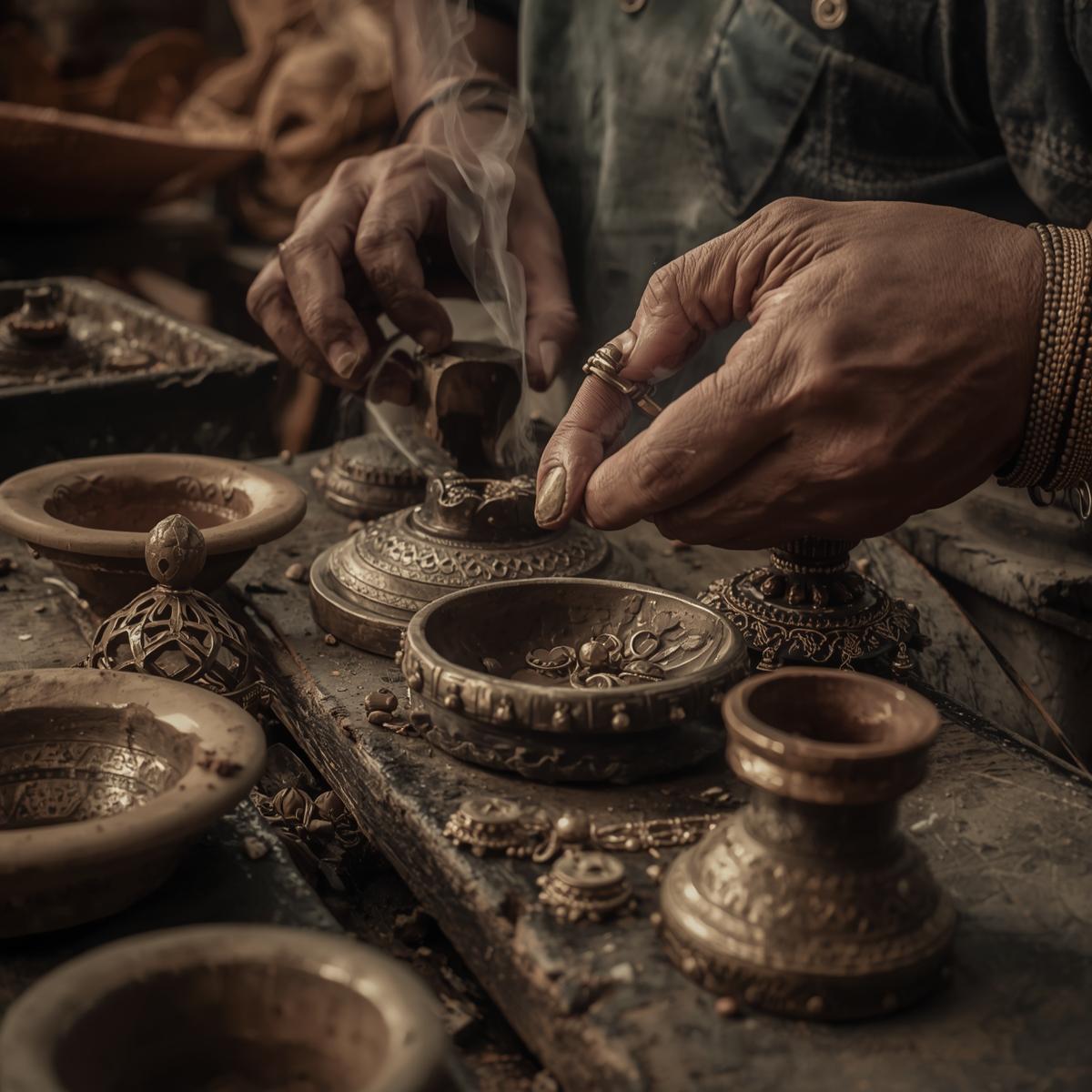
Dokra is one of India's oldest metal-casting techniques, practised by traditional communities across Eastern India. Using the lost-wax method, artisans create jewellery and ritual objects that carry the texture of earth and fire. The process is slow and entirely by hand: wax models, clay moulds, molten metal, and then the careful breaking of the mould to reveal the piece. Dokra families often work from cluster villages where the craft has survived for centuries. They face competition from mass production and the pull of urban jobs. Our role is to create a bridge — to value their time, their skill, and their story — so that dokra remains a living craft, not a museum relic.
Process & tradition — From wax carving to casting and finishing, every step is manual. Designs often draw from traditional motifs, nature, and local belief. No two pieces are identical.
Challenges & hope — We work with clusters that are reviving interest among younger artisans. When you wear or display dokra from House of Dhrti, you are part of that revival.