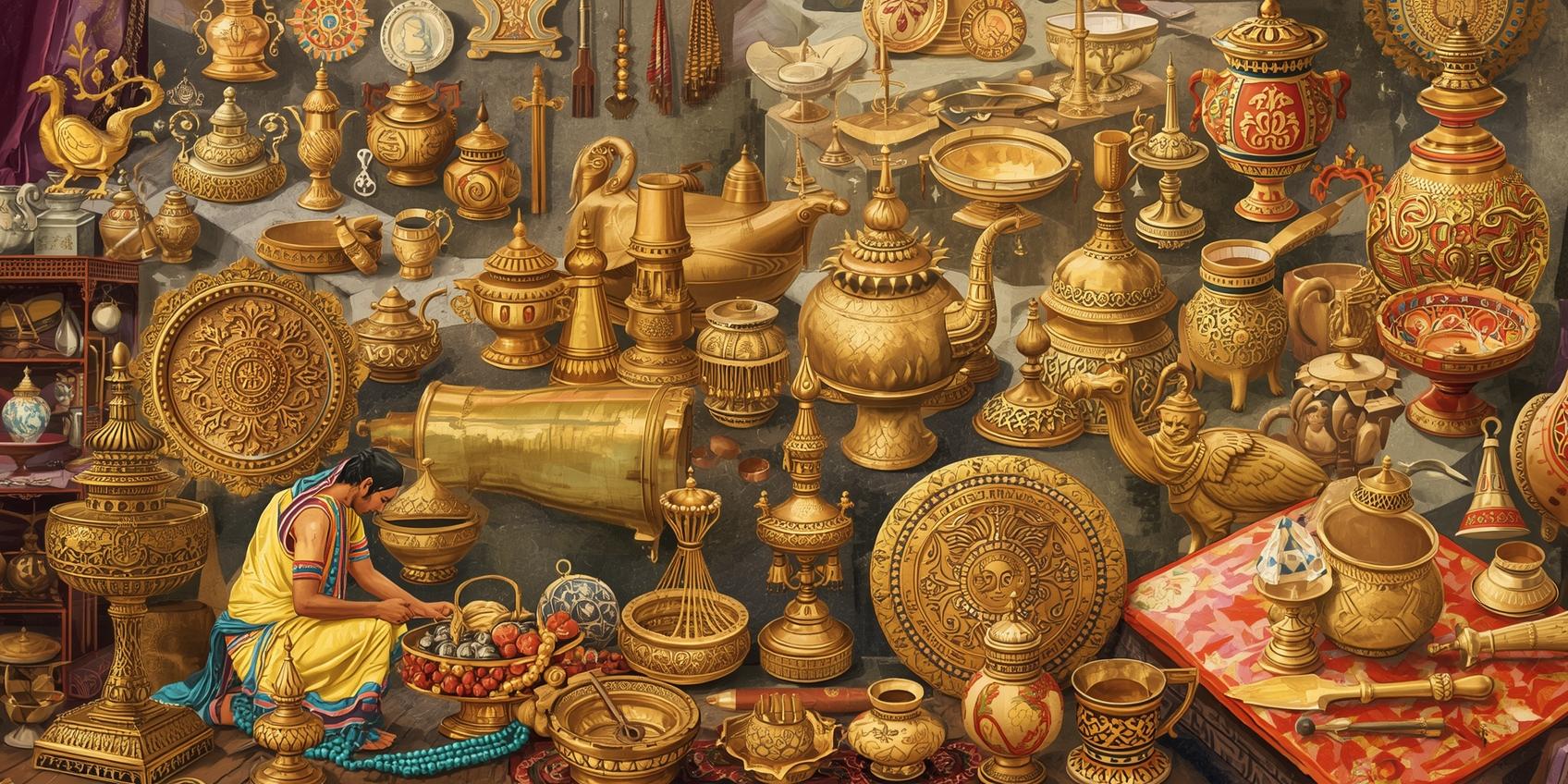
Dokra is one of the oldest metal-casting techniques in the world. In India, it has been practised by traditional communities for over four thousand years — and it is still alive today in the villages of Eastern India and beyond.
What is dokra?
Dokra (also spelled dhokra) refers to non-ferrous metal casting using the lost-wax method. Artisans create a model in wax, coat it in clay, fire it so the wax melts away, and then pour molten metal — usually brass or bronze — into the hollow mould. Once the metal cools, the mould is broken to reveal a rough casting that is then cleaned and finished by hand. The result is jewellery, ritual objects, and figurines with a distinctive, slightly rough texture. No two pieces are identical, because each wax original is unique.
Ancient roots
The lost-wax technique is not unique to India. It appears in ancient Mesopotamia, Egypt, and China. But in the Indian subcontinent it has a continuous history that archaeologists trace back to the Indus Valley civilisation. The famous dancing girl of Mohenjo-daro (c. 2500 BCE) is believed to have been made using lost-wax casting. Over the millennia, the technique spread and became embedded in traditional and folk traditions, especially among communities that had access to metal and the knowledge of firing. The word "dokra" is often associated with metal-working clusters of Eastern India, where the craft is practised by several communities.
Regional traditions
Across Eastern India, dokra clusters produce jewellery — necklaces, earrings, rings — as well as ritual objects and decorative items. The craft is concentrated in districts where it is linked to traditional and artisan communities. The motifs used in dokra draw from nature, local belief, and regional folklore: animals, birds, deities, and geometric patterns. The craft is deeply tied to identity: wearing or gifting dokra is a way of honouring tradition and the maker.
The process in detail
Making a single dokra piece can take days. First, the artisan shapes the design in wax — by hand or with simple tools. The wax model is then coated in layers of clay and dried. A small channel is left for the wax to escape and for the metal to be poured. The mould is heated so the wax melts and drains out (hence "lost wax"). Molten brass or bronze is poured into the cavity. After cooling, the outer clay is broken away. The casting is then filed, sometimes polished, and assembled if the design has multiple parts. The entire process is manual and requires skill, patience, and access to fuel and metal. There is no industrial shortcut that preserves the soul of the craft.
Why dokra matters today
In the twentieth and twenty-first centuries, dokra artisans have faced intense pressure. Mass-produced imitations, cheaper imports, and the migration of younger generations to cities have threatened the survival of the craft. Yet dokra has also found new audiences: design enthusiasts, collectors, and consumers who value handmade, traceable, and culturally rich objects. When we at House of Dhrti work with dokra clusters in Eastern India, we do so with the belief that this ancient craft deserves a future. Fair pay, patient timelines, and respect for the process are non-negotiable. When you wear or display dokra jewellery, you are not just owning an object — you are supporting a living tradition and the families who keep it alive.
Dokra and sustainable craft
Dokra is inherently low-waste and low-energy compared to large-scale metal production. It uses local materials, traditional furnaces, and human labour. The metal can be recycled; the technique does not rely on harmful chemicals. In a world hungry for authenticity and sustainability, dokra stands out as a model of how craft can thrive without compromising the planet or the dignity of the maker. The challenge is not the technique — it is the market. By choosing dokra from ethical sources, we create that market.