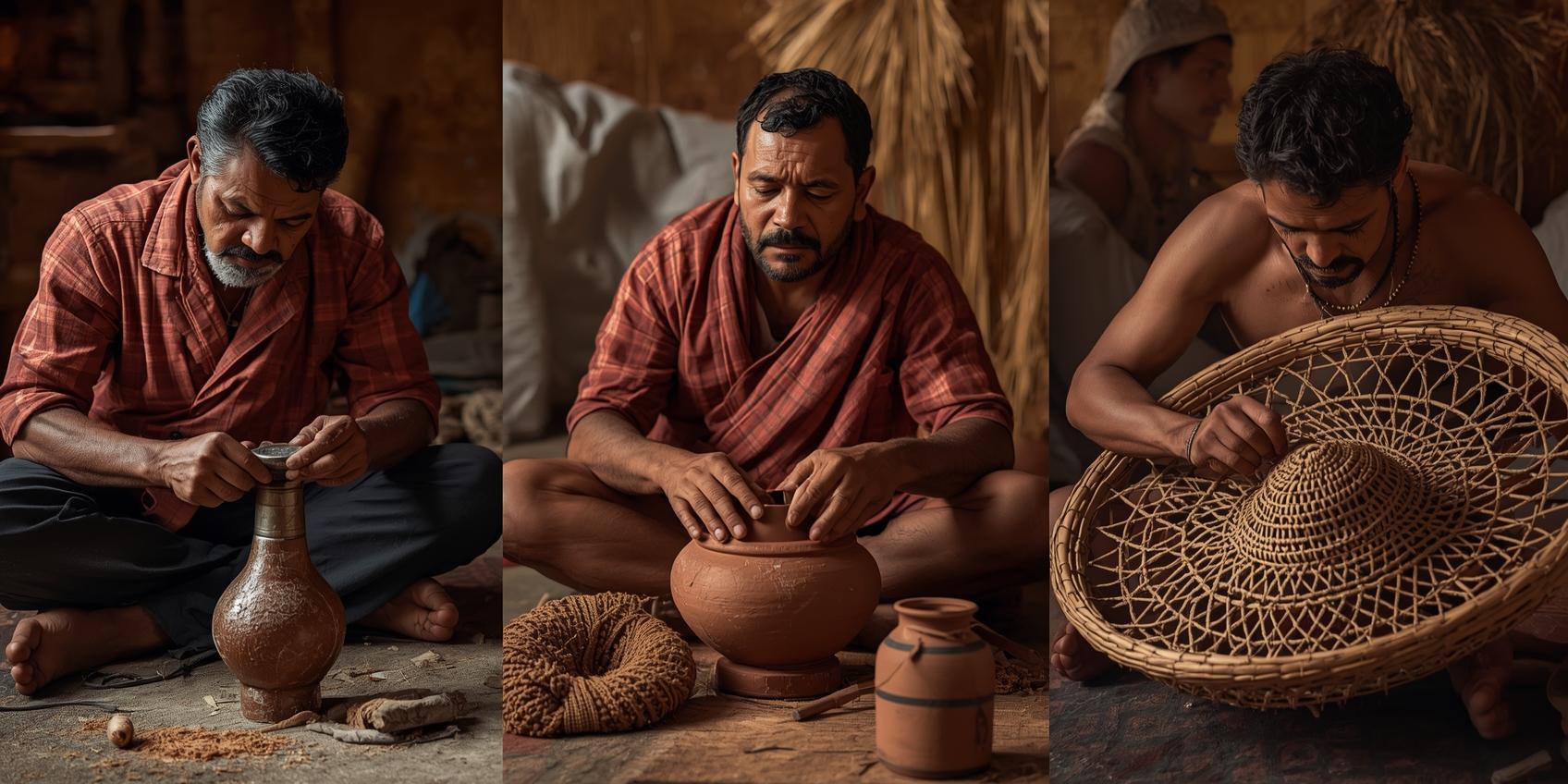
Our artisans
The hands are not anonymous. Men and women in Eastern Indian villages keep these crafts alive in courtyards, sheds, and rooms that double as workshops.
Terracotta & madurkathi
Households, not a production line.
Terracotta jewellery here is identity as much as ornament. Clay is local. Beads are pierced before they dry. Firing happens in wood or coal kilns whose temperature is known by eye and ear. The colour is iron in the earth and the way the fire treats it — not a bottle of pigment.
In the same region, madurkathi weavers harvest reed from wetlands, dry it with the season, and weave on home looms. Life follows the monsoon. A fair, repeating order is how a family plans school fees and keeps a child at the loom long enough to learn.
“When the order is fair, we can keep the kiln lit and still teach. Rush work teaches only how to hide the cracks.”
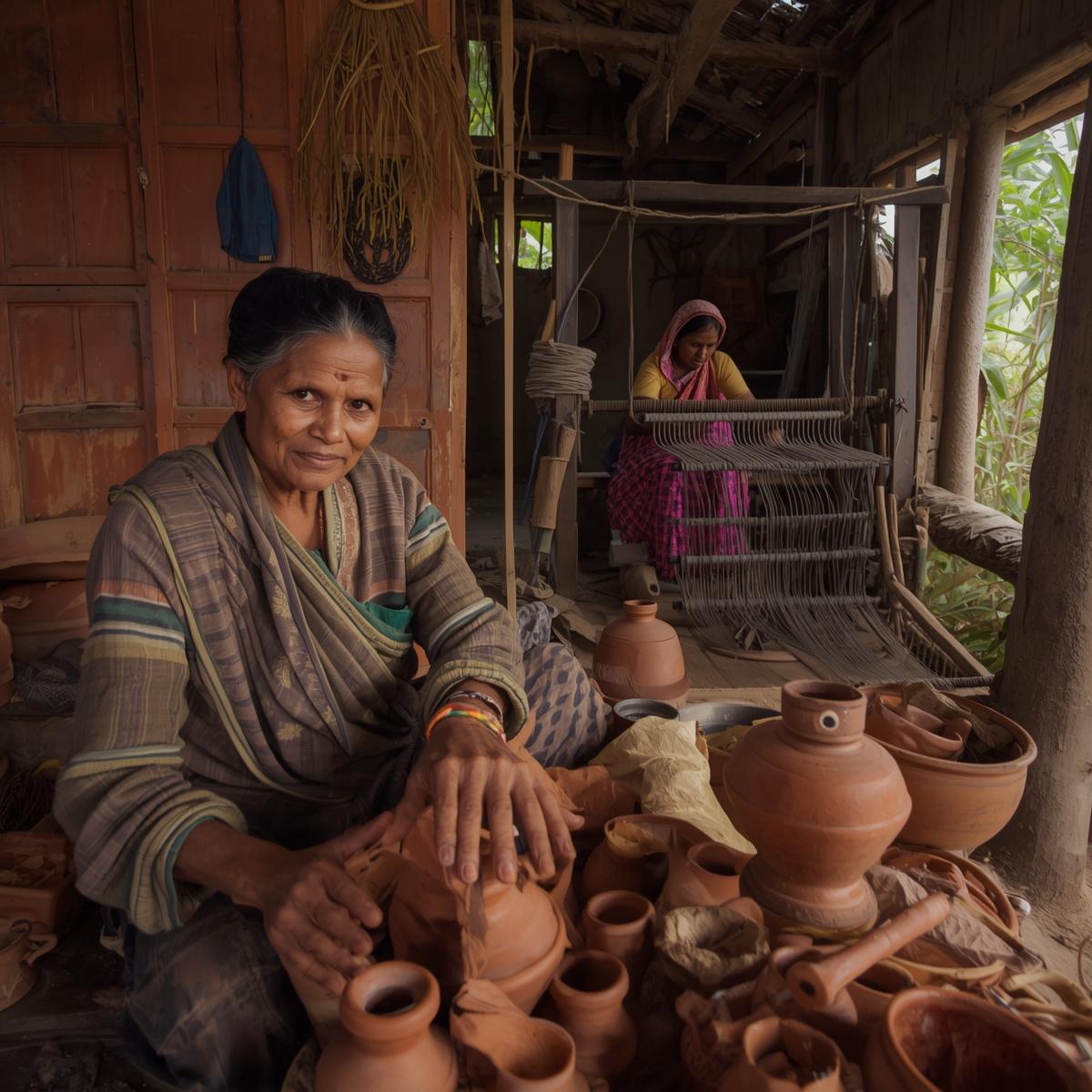
Dokra
Cluster villages, a mould that cannot be cloned.
Dokra is among India’s oldest metal-casting lineages: a wax original, a clay skin, fire that drinks the wax, then brass or bronze poured into the hollow. The mould is broken. The piece cannot be cloned from a steel die. Texture is the point.
Mass-produced shine competes with them. Urban wages compete with them. Our part is to value the days, not to ask for a cheaper cousin of the object.
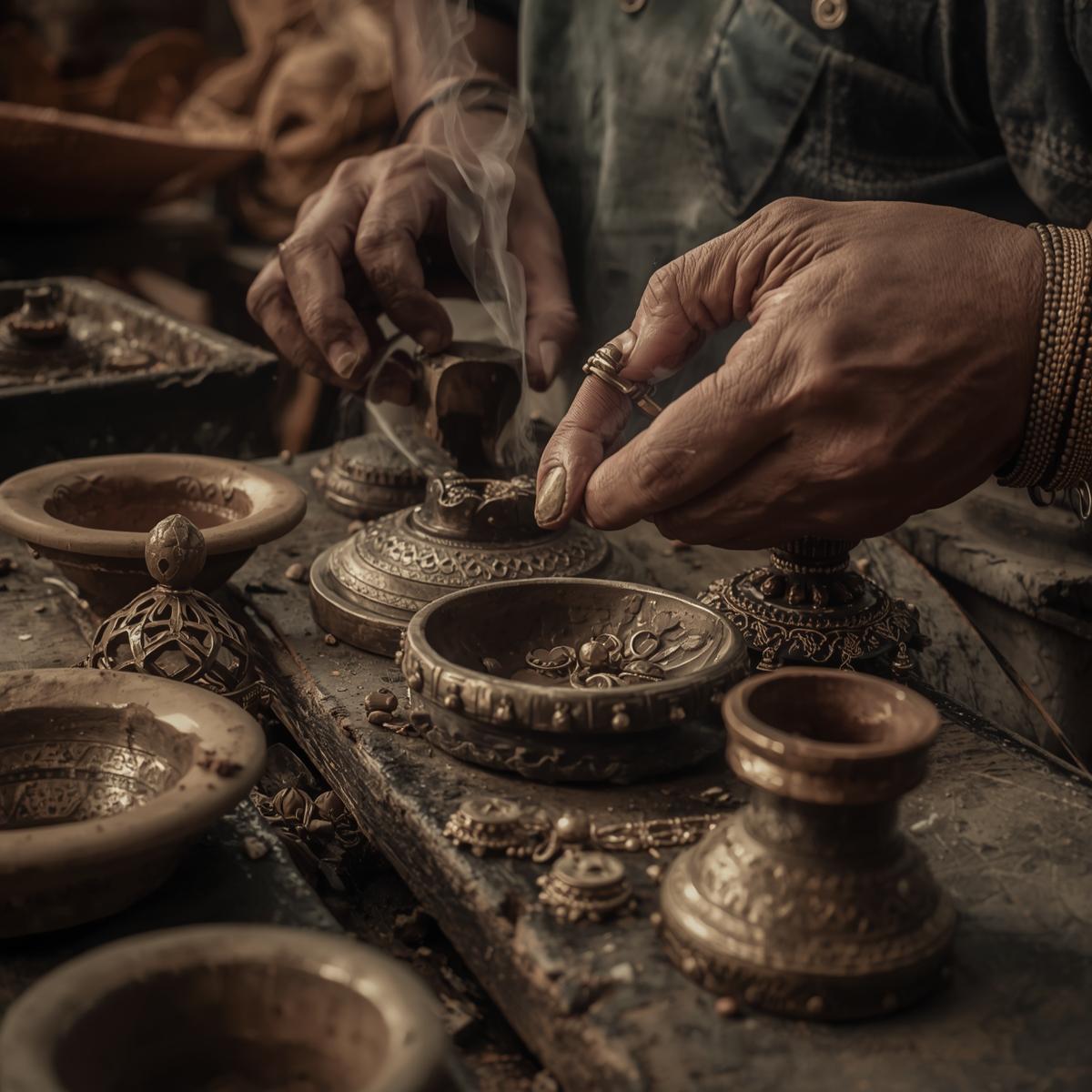
“Dokra is not a week of training. It sits in the house. The next generation stays if the work can feed them.”