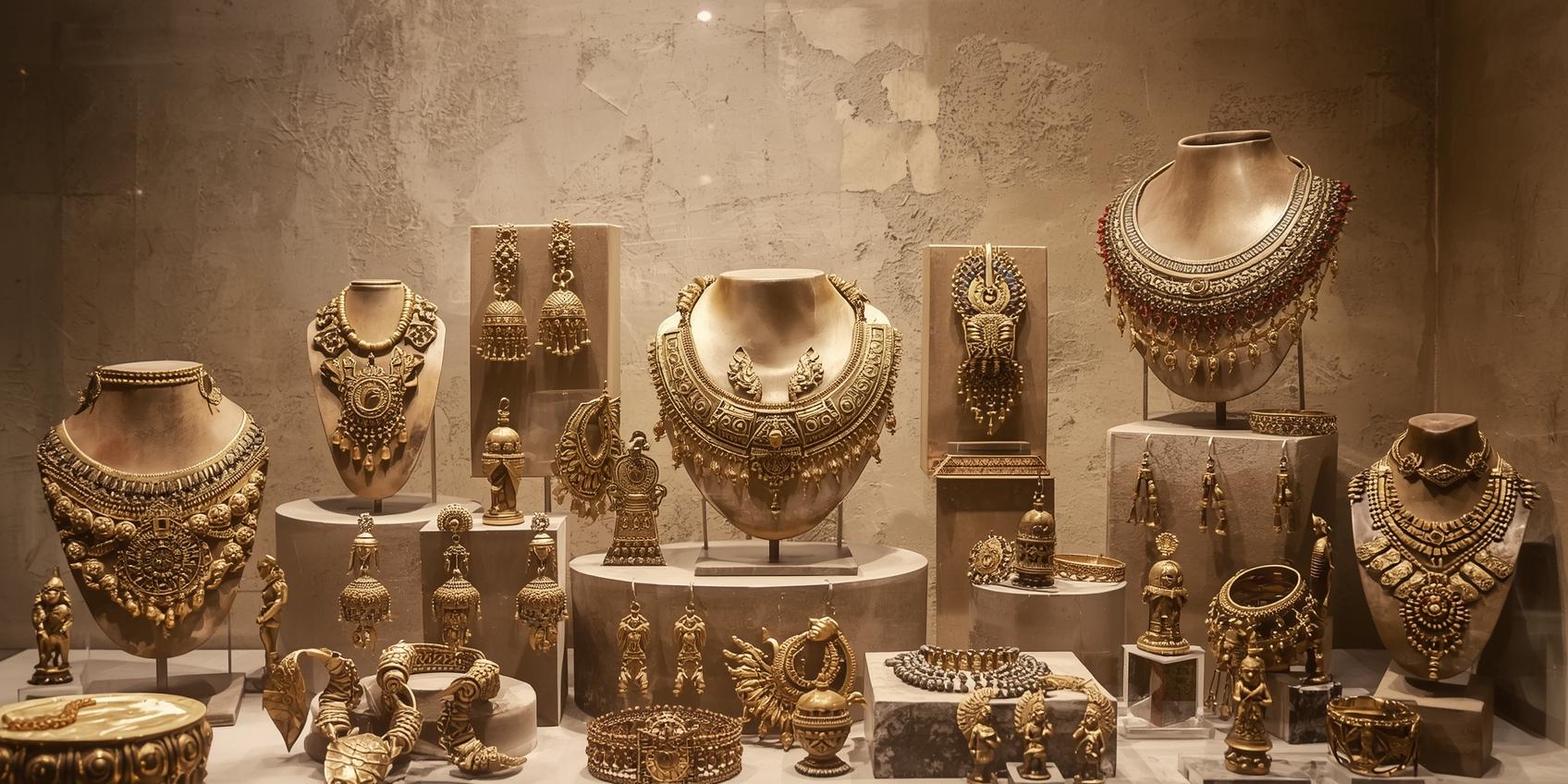
Dokra jewellery
Wax, clay, fire, metal. One of India’s oldest casting traditions, still practised in cluster villages of Eastern India.
The material
A mould that is born only once.
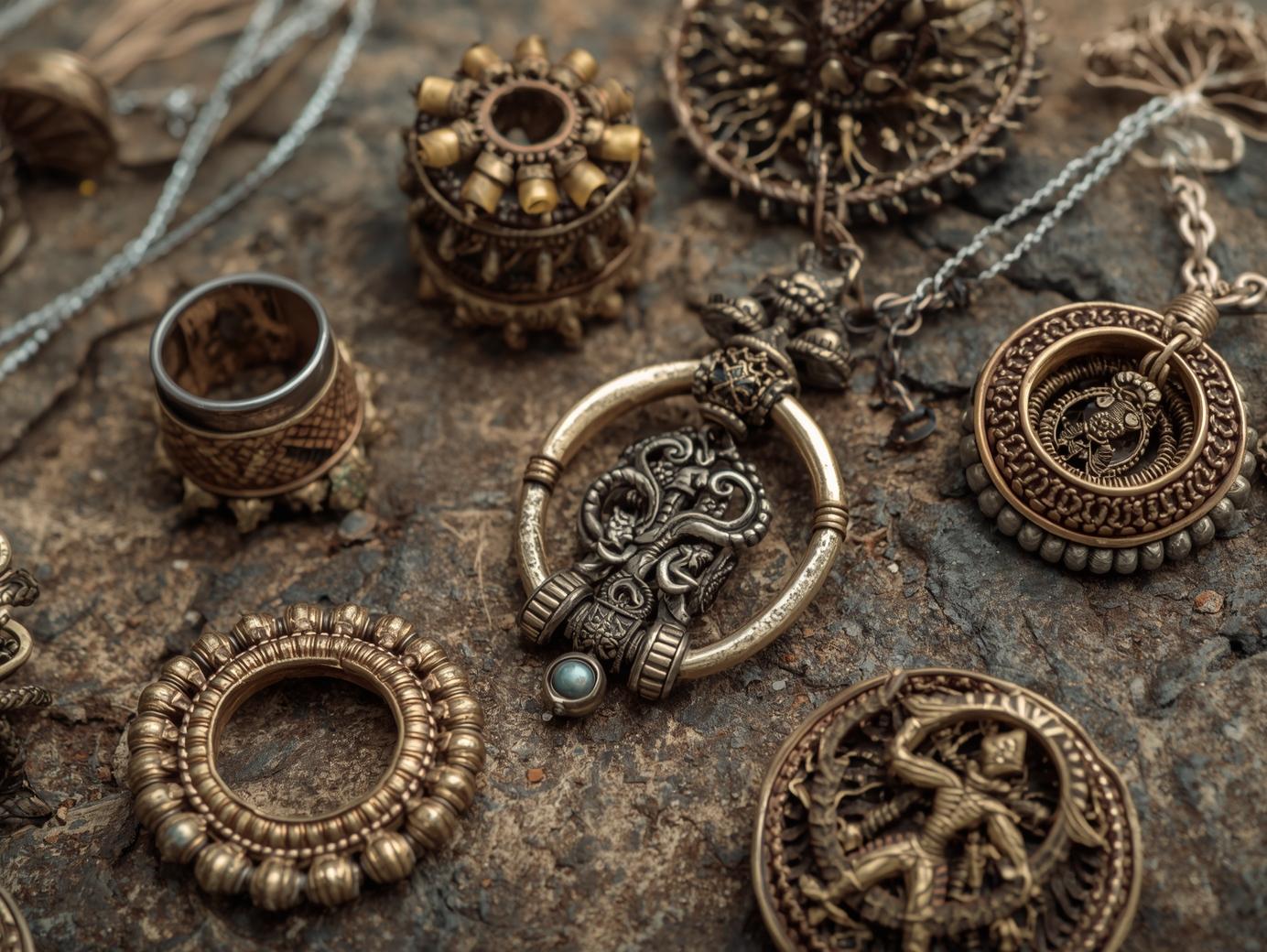
Dokra is non-ferrous metalwork by the lost-wax method. A model is built in wax, wrapped in clay, fired until the wax leaves, then filled with molten brass or bronze. When the metal cools, the clay is broken. There is no second copy hiding in the mould. Texture is inheritance, not a filter.
House of Dhrti will list dokra when those days can be paid honestly — not as a cheaper shine from somewhere that never saw the wax.
The making
This is not a week of lessons. It sits in the blood of the house.
The form is carved and built by hand. This is the only original.
Layers dry around the wax. A channel waits for metal, and for the wax to leave.
Wax drains. Brass or bronze is poured into the hollow the fire made.
The mould is destroyed. Filing and assembly take the rest of the days.
“This is not a week of lessons. It sits in the blood of the house. We stay if the work can feed us.”
Until the metal is ready
The live collection is still clay.
Terracotta is on Amazon now — the same Eastern Indian households, the same patience, a different fire. If you are waiting for dokra, write to us. We would rather tell you the truth of the timeline than hang a false shop.
From the kiln, while dokra waits
Hand-painted terracotta from partner households — the collection you can take home today.