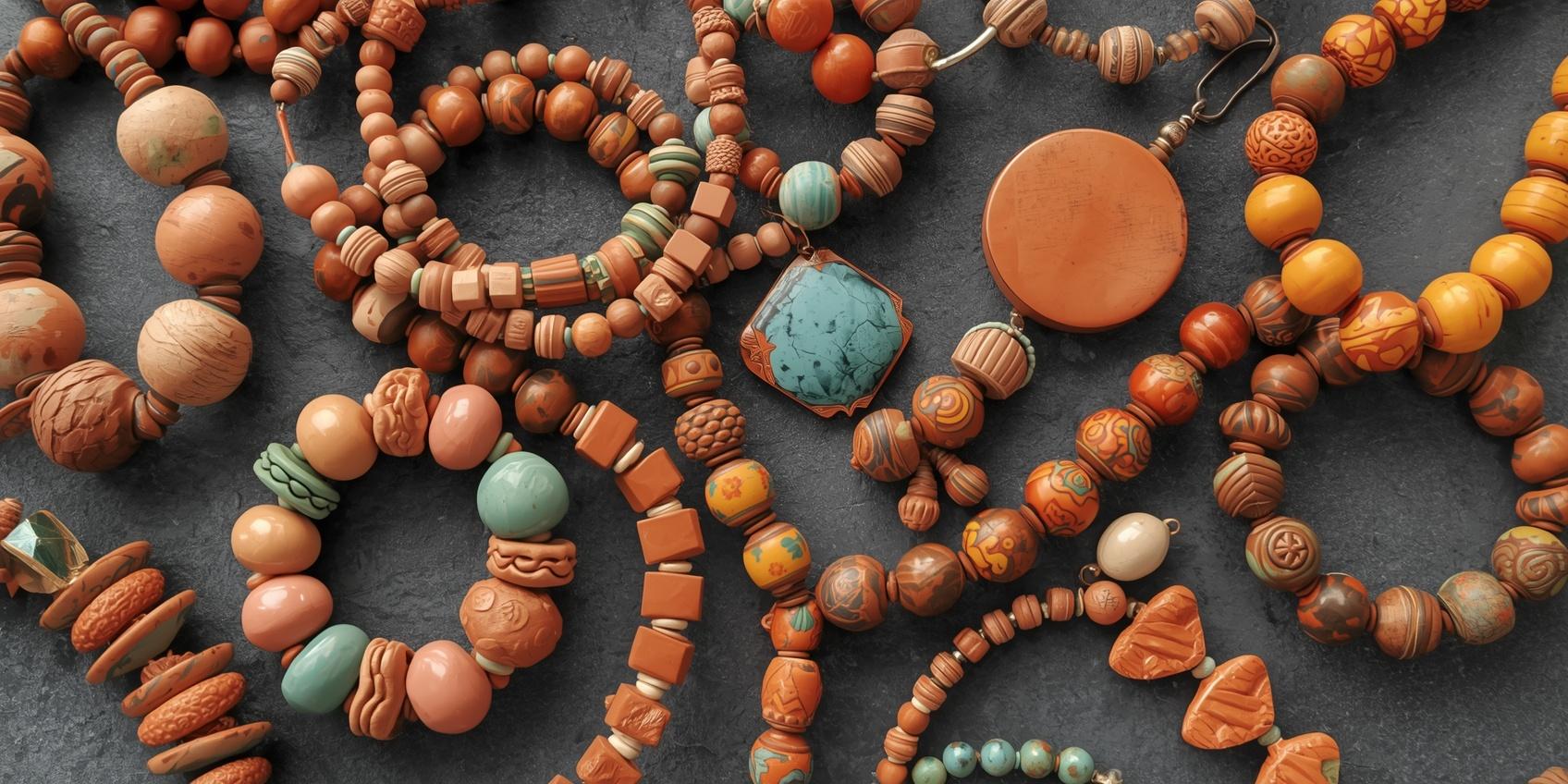
Terracotta jewellery
Earth, fire, and a steady hand. These pieces begin as local clay and leave the village as jewellery light enough for everyday wear — still carrying the warmth of the kiln.
The material
The land itself, worn as jewellery.
Terracotta jewellery has sat in Eastern India’s folk life for centuries — beads and pendants for ritual, for marriage houses, for ordinary Tuesdays. Iron in the clay and the firing atmosphere give the colour. We do not pour a synthetic red over a white blank and call it heritage.
We work with families, not a production line that has never seen a village kiln. What you see on Amazon is what those households made — listed under Dhṛti so the craft can travel without the maker becoming a courier.
The making
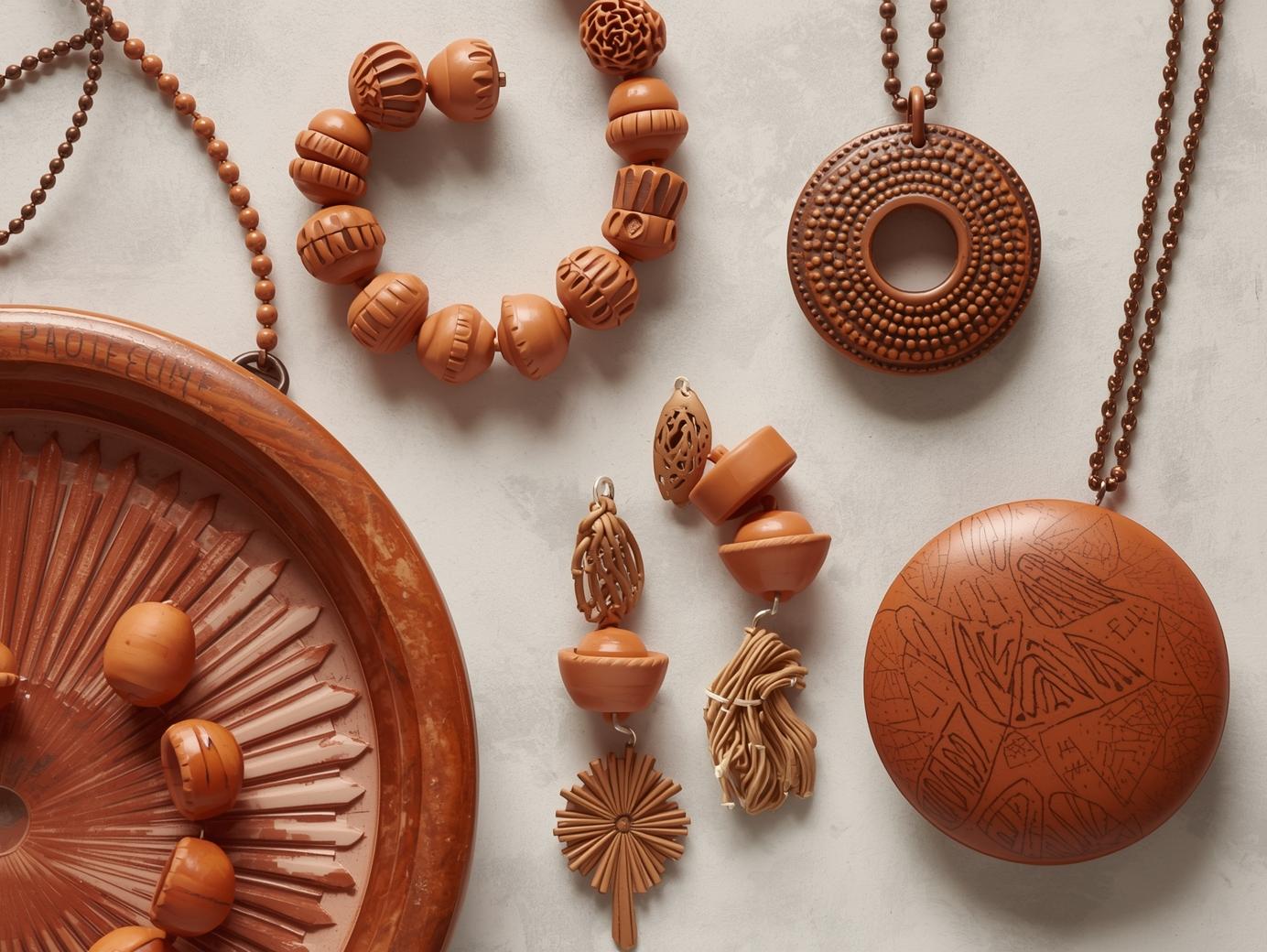
Slow, seasonal, entirely human. Clay is kneaded, shaped, pierced while still soft, dried, then fired. Painting happens after the piece can take a brush.
Local earth, cleaned and worked until it will hold a bead without lying.
Hands and simple tools. Holes made before drying, or the bead is only a stone.
Wood or coal kilns. Temperature by practice. Colour by iron, not by lab dye.
Motifs by brush. Sets assembled in the household that fired them.
“We make it as the house taught us. If the order is fair, the children still sit with the clay. If it is not, the kiln goes cold.”
The makers
A fair order keeps the kiln lit.
Choosing a House of Dhrti set is choosing the household that fired it — and accepting that a tiny irregularity is the signature, not a flaw to return.
The story is in the clay. The checkout is on Amazon.
Fulfilment, shipping, and returns follow Amazon’s process. The kiln, the paint, and the household stay here.